Level Up Collective
Learnings
Trust as infrastructureWhat Level Up Collective learned in a year
A year into Level Up Collective and we’re resisting the temptation to write the neat version of the story.The neat version would talk about a first cohort, a prize, three brilliant young changemakers, seed funding, mentorship, progress, outputs and impact. It would be true enough. But it would miss the more important learning.When we started Level Up Collective, we thought we were designing a programme for young creative changemakers. A small one, deliberately and independently self-funded, built around practical funding, mentorship, peer support and creative space. We wanted to back people who were already moving - people with the talent, courage and imagination to use creativity as a route into social change.But we also wanted to test something.
As a small team we brought experience from a range of commercial, creative, non-profit and social impact environments. We had spent years practising innovation, impact, venture building and ecosystem strengthening. That experience gave us a lot: useful tools, language, frameworks and discipline. But it also left us with a question.What happens when you step outside the predetermined model?So much social impact work is held inside existing constructs: cohorts, accelerators, milestones, outputs, reporting cycles, theories of change, funder priorities and measurement frameworks. These things exist for a reason. They can bring clarity, accountability and focus. But they can also start to shape the work before the people have had a chance to shape it themselves.
Level Up Collective was partly an attempt to create a small space outside that logic. Not because we had all the answers. More because we wanted the freedom to ask different questions.We self-funded the first cycle because we wanted room to be creative. We wanted to move quickly, listen properly, and avoid forcing young changemakers into a model before we understood what they actually needed. We wanted to test some instincts: that trust matters; that upfront funding changes the relationship; that storytelling is part of the work; that young people do not need rescuing or fixing; and that the role of support is not to provide answers, but to build the conditions in which better answers can emerge.Some of those instincts were right. Some were raw and needed sharpening.The first year has taught us a lot.
The response to the call gave us early confidence - it told us there was energy around the idea. It also reminded us that reach is complicated. We found brilliant people, but we also learned that reaching beyond our own networks - into the corners where creative talent is less visible, less connected, or less fluent in the language of social impact - will require more intention, partnership and time.From the start, we tried to make small choices that reflected a different power relationship.We used a charter rather than formal agreements. That mattered because we wanted accountability, but not hierarchy. The charter set out shared commitments between changemakers, mentors and the Level Up Collective team. It asked changemakers to show up with honesty and ambition. It asked mentors to bring clarity, challenge and encouragement. It asked us, as the Level Up Collective team, to hold a space that was safe, inclusive and driven.
We also released funding upfront, rather than asking changemakers to spend first and claim back later. In many entrepreneur support settings, reimbursement is treated as a normal administrative process. But for early-stage changemakers, cashflow is not an admin detail. It is part of the power dynamic. If you say you trust someone, but then ask them to carry the financial risk, the trust only goes so far.Our grant agreement was intentionally simple. It described the funding as trust-based and flexible, recognising that each changemaker was best placed to decide how to use it. We recorded intended uses for clarity and learning, not control. We asked them to reflect on how the funding was being used through their journal, so we could support, learn and adapt together.The journals became one of the most useful parts of the model.At first, they were designed as a check-in tool: part progress tracker, part creative logbook, part story engine. In practice, they became much more than that. They created a shared place to notice change while it was happening.
For Maddy, the journal helped us follow the evolution of Senedd Explained as it moved toward the Welsh election: sharpening its content, strengthening its visual identity, building team structures, investing in better equipment and growing confidence as a young civic media platform.For Barakat, the journal captured KKIVE’s movement from a production-focused creative project into a slower, more intentional cultural archive rooted in food, memory, identity and community.For Daniels, the journal helped hold a project that was still moving, shifting and finding form - from an early exhibition idea into a clearer product-led model that connects maker stories, creative practice and income generation.
None of those journeys moved in a straight line. That was the point.
We started with the language of a programme, but the work quickly became more personal, more relational and more staggered than that. Maddy’s journey had its own rhythm, shaped by the election cycle. Barakat’s work moved through questions of cultural practice, archiving, partnerships and care. Daniels’ work needed more time to land, partly because the idea itself was evolving across geographies, communities and creative forms.A fixed programme could have forced those journeys into the same shape. It might even have looked tidier from the outside.But it would have been less honest.
.
The first big learning is that young changemakers are already moving. Level Up Collective is not the main story in their journey. We are part of the conditions around them. That distinction needs underscoring. It also means not getting ahead of ourselves.Sometimes the work is not to help someone “grow” their project in the way we might imagine from the outside.Sometimes the work is to help them articulate what they already know, organise what is already there, clarify their values, and hold themselves accountable to the direction they have chosen.The changemakers knew a lot about what they needed - they rarely needed us to tell them. They needed reassurance, reflection, challenge and support to pursue it with more confidence.
“Most valuably, I’ve had someone who is both checking in and challenging me.”
The second learning is that flexibility is not the same as looseness. In fact, trust-based support may need more craft, not less. Without a rigid programme structure, you have to hold rhythm, attention and momentum in other ways. You need check-ins that feel useful, not extractive. You need prompts that open thinking, not forms that close it down. You need enough structure to help people move, and enough flexibility to respect the reality of their lives.It also means resisting the temptation to give everyone the same curriculum, the same resources, or the same rhythm just because that is easier to manage. What helps one person may be irrelevant, or even burdensome, to another.And we have to remind ourselves again that Level Up Collective is never the only thing someone is carrying. They have work, study, family, health, other programmes, other opportunities, and all the ordinary mess of life.Support should create momentum, not become another pressure point.
“Trust-based support isn't the absence of structure. It's realy just a different kind of structure - built around care, honesty, rhythm and practical challenge.”
The third learning is that mentorship is not just skills-matching.On paper, it is easy to match a changemaker with someone who has the right expertise. In practice, chemistry matters. Tone matters. Timing matters. Motivation matters.The best mentoring relationships were not simply about transferring knowledge between people in the same field. They created confidence, challenge, affirmation and space to think.Where the fit was less natural, we learned that human dynamics cannot be automated away.
The fourth learning is that peer support needs to be designed, not assumed.We liked the idea of a cohort. We still do. But a cohort does not become a collective just because people are selected at the same time. The changemakers had jobs, projects, health issues, travel, deadlines, energy dips and very different rhythms. The peer group did not always form in the way we had imagined. That does not mean the collective idea is wrong. It means we need to take it more seriously.A collective does not emerge automatically because people share values. It needs facilitation. It needs intentional opportunities to build trust. And it probably needs to be co-designed with the changemakers themselves, rather than assumed in advance by us.
The fifth learning is that the most valuable support was often the hardest to measure.The funding helped. The practical support helped. Equipment, software, websites, social content, venue thinking, mentor introductions and strategic advice all mattered.But again and again, the value seemed to come from having a trusted place to think aloud. A place to be challenged without being judged. A place to change your mind without feeling like you have failed. A place to try something, close something down, get organised, and untangle the difference between delivery, strategy and purpose.That kind of space is easy to undervalue because it doesnt look like an output. But it changes the quality of everything that follows.
This has probably been the biggest lesson.We came into Level Up Collective with a mix of professional experience and instinct. Some of that instinct was good. We believed that trust would matter. It did. We believed that giving young people autonomy would unlock better decisions. Often, it did. We believed that storytelling was not a communications add-on, but part of how changemakers understand and value their own work in real time. That also proved true.But we also underestimated a lot.The level of care needed to hold an open model well. How much structure is needed around flexibility. How difficult it is to create peer connections when lives are full and complicated. How precise mentor matching needs to be. And how much time it takes to support someone without taking over.That is the useful discomfort of the first year.
Level Up Collective began as a programme. It is becoming a practice.Not an accelerator. Not a prize fund. Not a traditional cohort model. And not simply a mechanism for producing more projects, products or services.Something closer to a trust-based collective of young creative changemakers, mentors and supporters, working together to build the conditions in which people can grow - and, through that growth, develop stronger ideas, deeper confidence and more meaningful social value.We care about what gets made. But we care more about who the changemaker becomes in the process of making it.That distinction matters.Our next phase is not about scaling a blueprint. It is about refining the conditions.
“We care about what gets made. But we care more about who the changemaker becomes in the process of making it”
We need to get better at outreach, so more young people from more places can find us.We need to design peer exchange more intentionally, so changemakers can learn from and support each other without being forced into artificial rhythms.We need to improve mentor matching, briefing and support, and get better at channeling the goodwill of our mentor network into focused, timely support that actually reaches changemakers when they need it.And we need to keep asking what Level Up Collective is really here to do.For now, the answer feels simple. We are here to back young creatives who are already moving - even when the destination is still forming.
That means we are not only interested in the final artefact: the product, the platform, the service, the campaign, the exhibition, the archive, the event. Those things matter. They give shape to the work. They make the change visible. But they are not the central story.What matters more is the person becoming able to hold the work with more confidence, clarity and care.
We are interested in what happens when a young changemaker has the space to explore an emergent idea without being rushed too quickly into a fixed output.We are interested in what becomes possible when belief, trust, commitment, honesty, dedication and focus are structured around them in a way that is human, practical and demanding.That is the difference we are trying to build.
An archetypal entrepreneur support programme often starts with the destination: define the product, test the model, measure the output, report the impact.Level Up Collective starts somewhere slightly different. We start with the changemaker. Their instinct. Their energy. Their lived experience. Their creative practice. Their uncertainty. Their ambition.Then we build around that.Practical support. Honest challenge. Useful relationships. Trust-based funding. Reflective space. Moments of focus. Permission to rethink. Encouragement to follow through.Not a funnel. Not a fixed script. Not support that only counts if it produces a neat final deliverable.
A structured, trust-based environment where brilliant people can become more resourced, more connected, more intentional and more fully themselves.Because our belief is that when young changemakers are properly backed - not controlled, not rushed, not directed, but genuinely backed - great things will emerge.
"Our belief is that when young changemakers are properly backed - not controlled or rushed - great things will emerge."
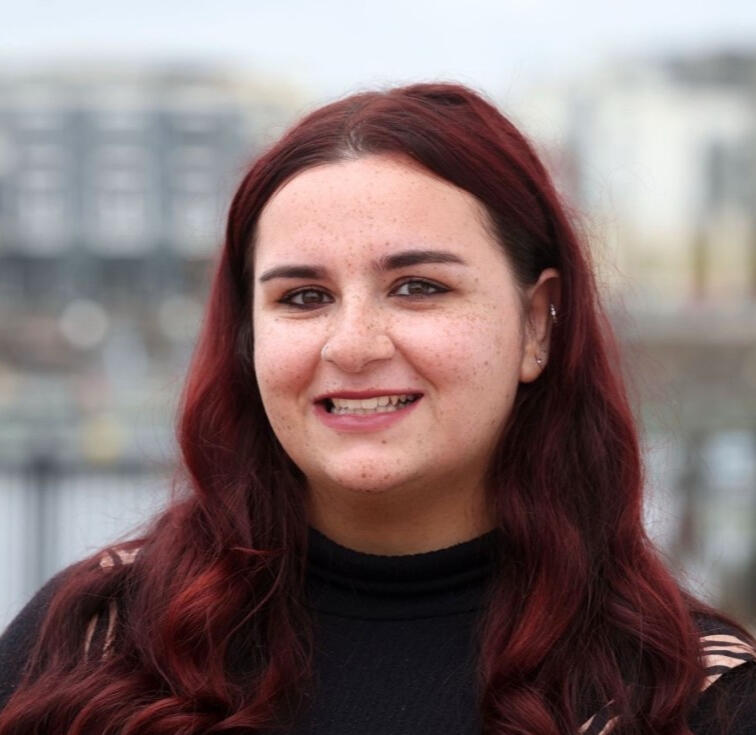
Maddy
A political educator making Welsh democracy easier to understand.

Barakat
A cultural curator building an archive of food, memory and everyday life.
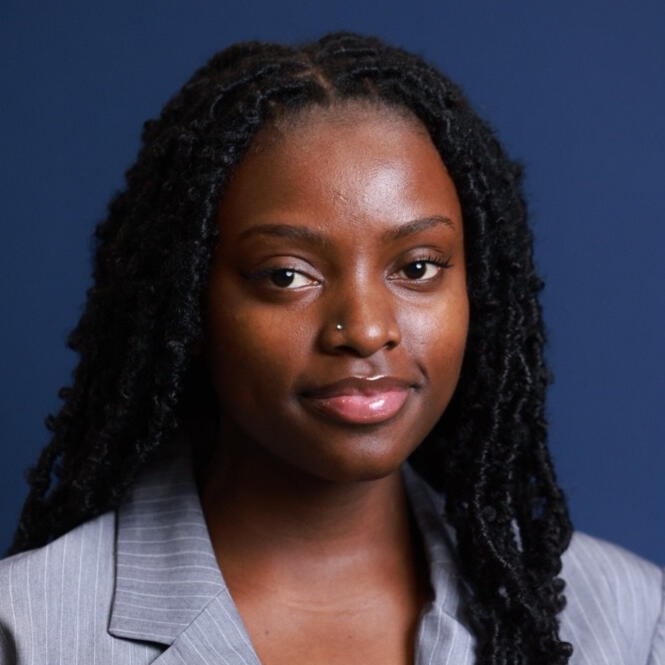
Daniels
A social entrepreneur turning lived experience into voice and opportunity.
© Level Up Collective.
All rights reserved.
PRECINCT CIC: 16516812